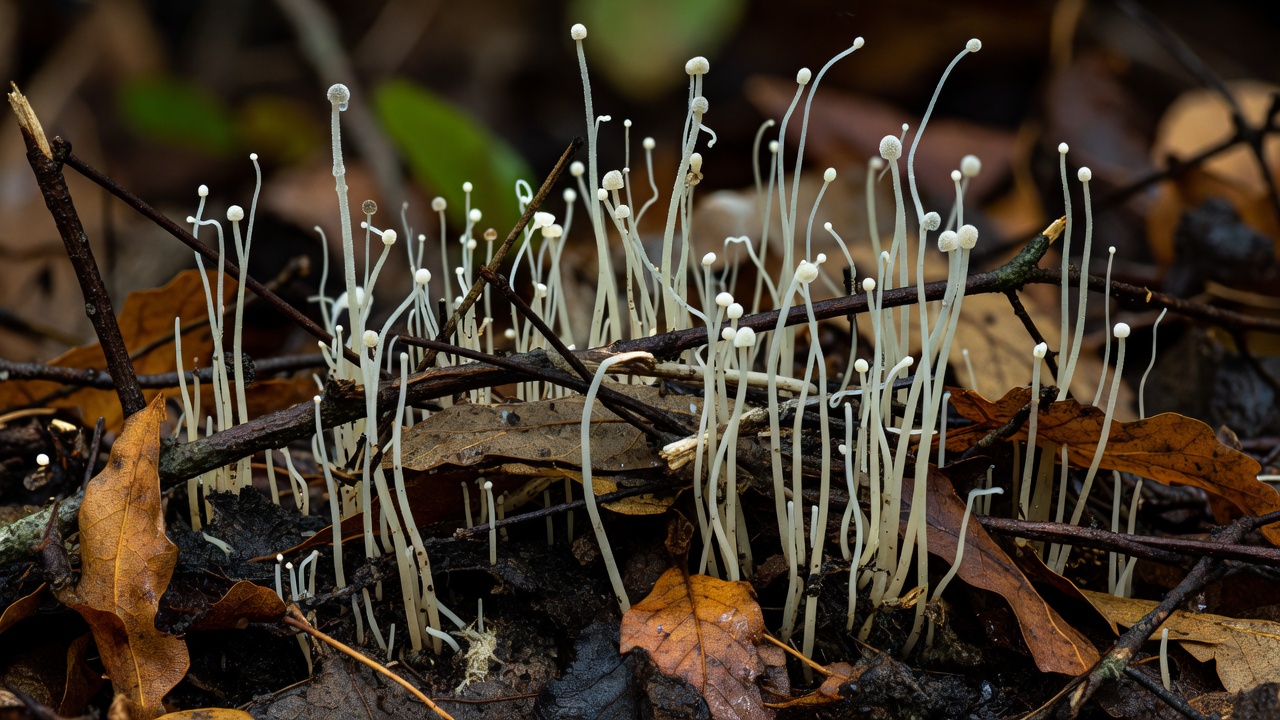
In mainstream pop culture, zombies are a staple of horror fiction—usually the result of a synthetic virus or supernatural curse. In the dense rainforests of Brazil, Thailand, and parts of the United States, however, zombies are completely real. But the victims are insects, and the mastermind is a highly specialized, parasitic organism known as Ophiocordyceps unilateralis.
Often referred to simply as the "cordyceps fungus," this organism survives by enacting one of the most horrifying biological processes known to science: absolute physical mind control.
The Mechanism of Infection
The nightmare begins when a foraging carpenter ant, walking along the forest floor, accidentally brushes against a fungal spore. The spore attaches to the ant's exoskeleton. Using enzymatic pressure, the spore drills through the ant’s armor and enters its bloodstream.
Once inside, the fungus begins to replicate as yeast-like cells, circulating through the ant's body. Surprisingly, at this early stage, the ant behaves completely normally. It continues to work for its colony. Meanwhile, the fungal cells begin to network, creating a physical, tubular structure that spreads through the ant’s muscle tissue, particularly focusing on the legs and mandibles.
The "Zombie" Phase
The turning point arrives roughly two weeks post-infection. The fungus reaches a critical mass and begins secreting specific, biologically active alkaloids and chemicals that hijack the ant's central nervous system. At this moment, the ant loses free will.
Controlled entirely by the parasite, the ant ceases its normal foraging behavior, abandons its colony, and begins a highly erratic climb up a nearby plant stem. The fungus compels the ant to reach a very specific microclimate: exactly 25 centimeters above the forest floor, facing north or northwest, usually on the underside of a leaf, where temperature and humidity are optimal for fungal growth.
Once the ant reaches this exact location, the fungus forces a final, fatal command. The ant bites down onto the major vein of the leaf with incredible force. As it bites, the fungal network physically severs the muscle fibers in the ant's jaw, locking its mandibles shut in what biologists term the "death grip." The ant dies shortly after.
Spreading the Spores
With the ant securely anchored and dead, the fungus enters its reproductive phase. Over the next several days, a large, fruiting stalk (the stroma) erupts from the back of the ant's head. When the stalk matures, it acts as a showerhead, raining thousands of infectious spores down onto the forest floor below, exactly over the foraging trails of the ant's former colony, thus starting the cycle over again.
| Phase | Duration | Ant Behavior |
|---|---|---|
| Infection | Day 1 - 2 | Normal behavior, spore penetrates armor. |
| Incubation | Day 3 - 14 | Foraging continues while fungus builds internal network. |
| Hijack & Climb | Day 15 - 16 | Erratic movement, forced climb to 25cm height. |
| Death Grip & Eruption | Day 17+ | Ant bites leaf vein, dies, fungal stalk grows from head. |
Ecological Role
While the process sounds sadistic to a human observer, Ophiocordyceps plays a crucial role in the jungle ecosystem. The fungus acts as a population regulator. If a specific colony of ants becomes too successful and populous, they increase their chances of encountering the spores. The fungus thereby prevents any single species of ant from gaining total dominance over the forest floor.
Furthermore, ants have evolved counter-measures. If worker ants spot an infected peer exhibiting erratic behavior, they will aggressively pick up the infected ant and carry it far away from the colony to die, essentially implementing a biological quarantine protocol to protect the nest.
The existence of Ophiocordyceps serves as a stark reminder that in nature, behavior can be chemically engineered. The lines between autonomy and parasitism are entirely blurred by evolution.